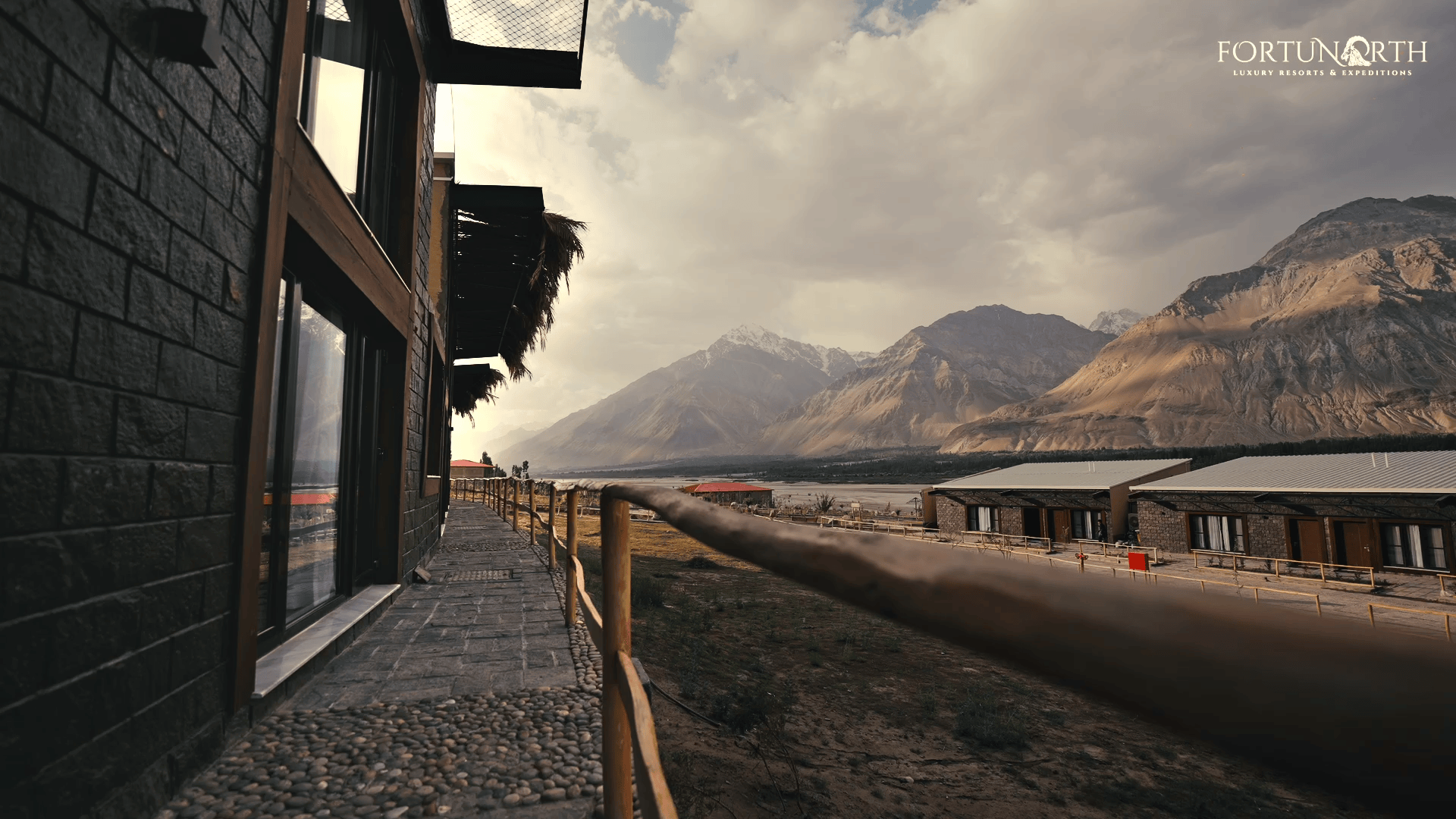
In the Karakoram, sunset happens in two acts. First, the sun sinks behind a peak, and the valley around you goes cold and blue, often an hour before the clock says it should. Then, minutes later, the summits above catch the last light and glow orange, pink, and red. That second act, often called alpenglow, is the reason most people come to the northern mountains of Pakistan.
The range runs through two regions that visitors often blur together: Hunza in the west and Baltistan around Skardu and the Shigar Valley in the east. This guide lists the best places to watch the light go, from a ten-minute drive to a week-long trek, then explains how to plan the evening, how to photograph it, and why a base in Skardu makes the pictures easier.
Top sunset locations in the northern mountains of Pakistan
The list below runs from places you can reach in a short drive to places that need a full expedition. Be honest about your fitness and your time before picking one.
- Eagle's Nest, Duikar (Hunza): A viewpoint village above Karimabad, at roughly 2,900 metres. The 360-degree panorama takes in Rakaposhi, Ultar Sar, Lady Finger, and the Passu Cones. The road up is steep and narrow, so arrange for a driver.
- Golden Peak (Hunza): The peak, also known as Spantik, picks up the last light when seen from Karimabad.
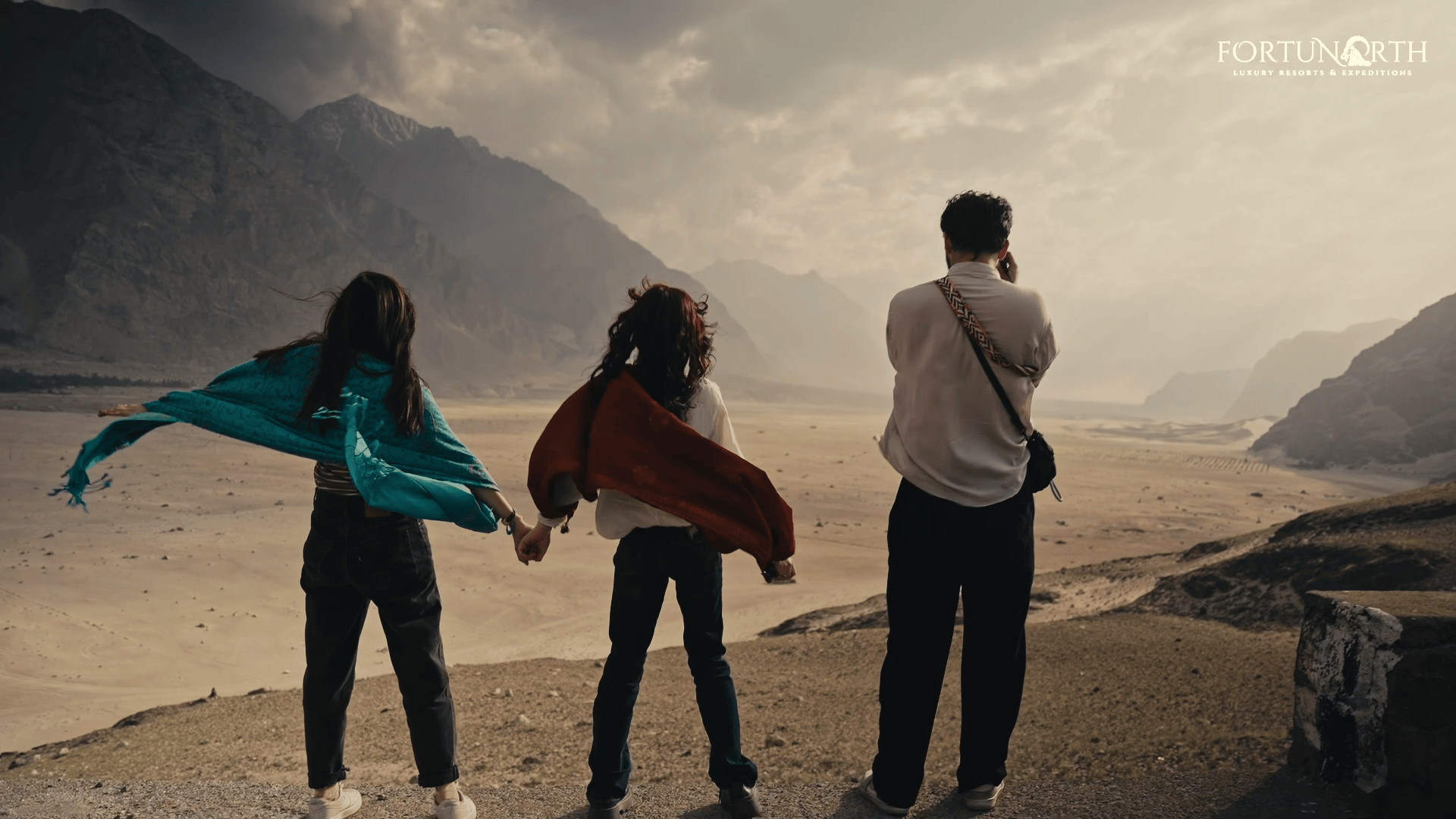
- Sarfaranga Cold Desert, Shigar Valley (Baltistan): Dunes about 13 kilometres from Skardu's main bazaar, best at sunset or sunrise, when the sand turns red, pink, and orange. Strong winds lift dust, so protect your gear.
- Nangma Valley and K6-K7 Base Camp (Hushe, Baltistan): Reached by a six- to seven-hour jeep drive from Skardu, then on foot. The valley looks toward Amin Brakk, K6 and K7, and the K6-K7 base camps sit at about 4600 metres. Summer, roughly June to September, is the usual season. Expect Camping.
- Concordia (Baltoro Glacier, Baltistan): The meeting point of glaciers, with K2, Broad Peak and the Gasherbrums in sight, at around 4,650 metres. It is accessible via a long jeep ride from Skardu to Askole and then approximately a week's trek. One trekker describes the sunset there as one of the most wonderful moments of the trek. It requires fitness, licences and a licenced operator, and it’s not just a weekend outing.
How to plan a great Karakoram sunset
Good sunsets here come from planning for the mountains, not the calendar.
- Choose the season for the place: Hunza turns gold in October and November, and the sky is usually at its clearest then. Baltistan's trekking valleys and plateaus are mainly June to September. Winter closes many high roads.
- Plan for an early sunset: Tall ridges hide the sun well before the listed time. One photographer at Sarfaranga in early November found that sunset arrived at least an hour early behind the mountains. Arrive 60 to 90 minutes ahead and stay 30 minutes after the sun is gone, because the summits can keep glowing after the valley has gone dark.
- Scout in daylight: Walk the spot before the light, pick your foreground, note which way the sun sets, and check the path back.
- Arrange the return in advance: Roads to viewpoints such as Eagle's Nest are steep, and you will be coming down in the dark. Book a driver who knows the route.
- Dress for the drop: Temperatures fall fast once the sun leaves the valley. Bring a hat, gloves, a headlamp and a flask.
- Keep a buffer day: Cloud, rain or a cancelled flight can wipe out one evening, so plan at least two chances at your best location.
Tips for capturing the best shots
The challenge in the Karakoram is contrast: bright snow on the peaks, a dark valley below. These habits handle it.
- Expose for the peaks. Let the valley go dark rather than blowing out the summits. If your camera allows, shoot RAW and take a few frames at different exposures.
- Use a tripod. After the sun leaves the valley, shutter speeds drop. A tripod lets you keep ISO low and the image clean.
- Give the peaks a foreground. A fort wall, a line of poplars, dunes, a suspension bridge or a person for scale turns a postcard into a picture. Keep the horizon off dead centre.
- Keep batteries warm. Cold drains them quickly. Carry spares in an inside pocket, and let a cold lens warm up slowly before moving into a heated room to avoid fogging.
- Protect against dust at Sarfaranga. Wind lifts fine sand. Keep the lens capped between shots and avoid changing lenses outdoors.
- On a phone, tap and hold on the bright sky to lock exposure, switch on HDR if it offers it, and wipe the lens first.
- Check drone rules and permissions before flying, and respect other people's privacy and the quiet of the viewpoint.
- Look behind you. Warm light on the opposite hillside often makes a better image than the sun itself.
Why hotels in Skardu make the photography easier
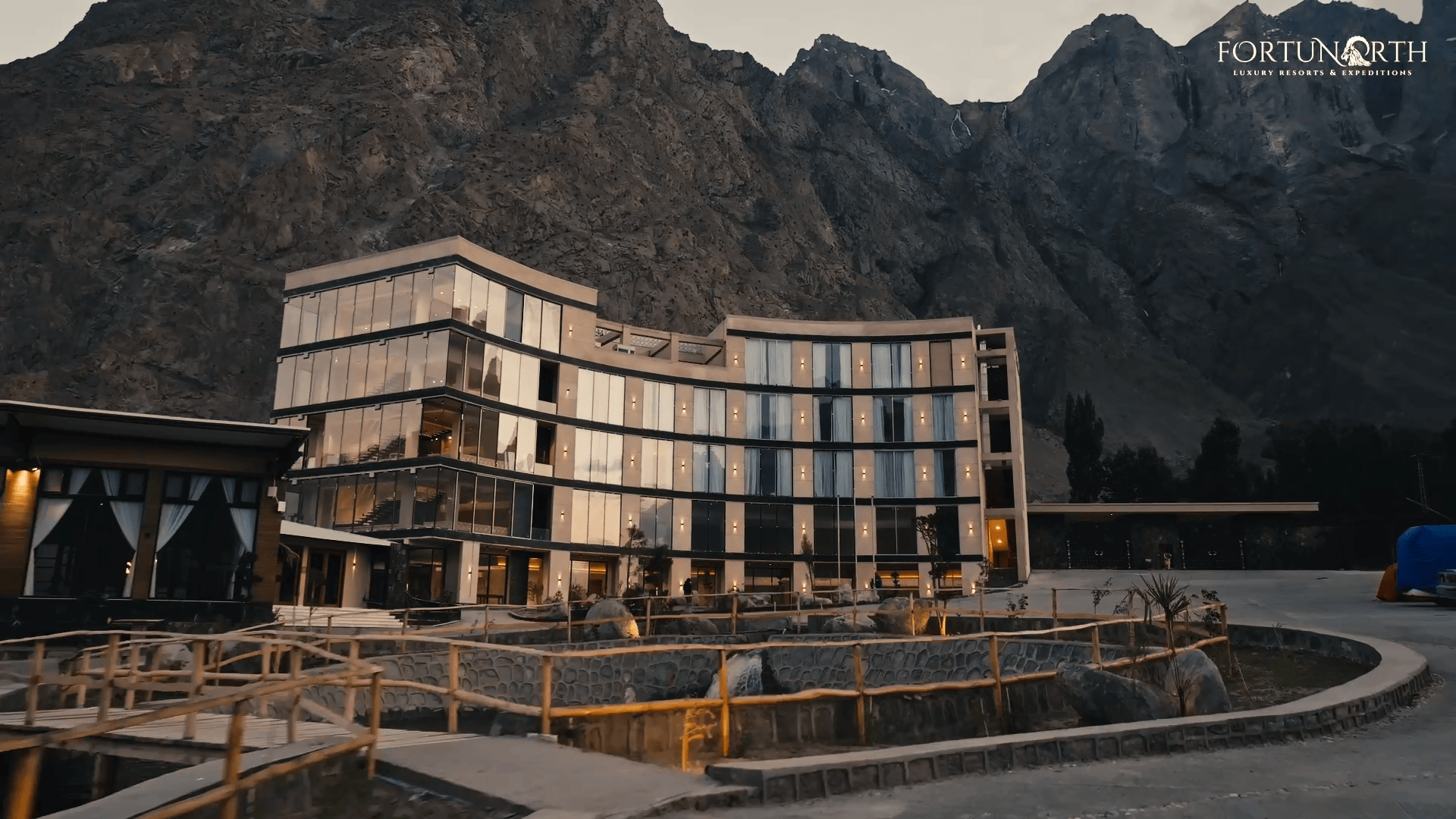
Skardu is the hub of Baltistan, and a base here puts much of the best light in this part of the northern mountains of Pakistan within easy reach.
- Short returns. Sarfaranga is about 13 kilometres from the main bazaar, and the Shigar Valley is roughly a 45-minute drive. You can leave 30 minutes before the light and be back in a warm room soon after dark.
- A second shot at the same spot. Staying two or three nights lets you return when the first evening clouds over.
- A staging point for treks. Jeeps for Askole and the Concordia Trail and for Hushe and the Nangma Valley both leave from Skardu on journeys of six to seven hours, so a hotel is where you store clean clothes and spare gear.
- Local help. Staff at established Skardu hotels can usually arrange a driver, a 4x4 and an early breakfast flask, and they often know which viewpoints are clear on a given evening.
- Lakes and a fort within the town's reach. Kharpocho Fort is a short late-afternoon climb above the city, and the Kachura lakes are a short drive away.
When you compare the best hotels in Skardu, ask these questions:
- Which direction do the windows and terrace face, and which peaks can I see from them?
- Is there heating and hot water at dawn and after dark?
- Is there backup power for charging batteries?
- Can you arrange early departures, late returns and a driver?
- Is there somewhere to dry and store gear?
Whichever hotel you pick, judge it by how little friction it adds between you and the light.
Pick Your Sunset Destination, Then Plan Your Stay
You do not need a trek to see the northern mountains of Pakistan at their best at day's end. A hotel terrace in Karimabad, a drive to the dunes of Sarfaranga, or an evening at Eagle's Nest will show you the second act of the Karakoram sunset. Concordia and the Nangma Valley reward those with the time and fitness to go further.
Choose a place that suits your fitness level, pick the season that matches the place, and base yourself where the return journey is short. Tell us your dates and how far you want to walk, and we will suggest a route and a stay in Gilgit-Baltistan that fit.